The Sustainable Coastal Fisheries program is the result of cooperation between the Malagasy Government and the German Government, through the German Development Bank KfW. Coordinated by Madagascar National Parks (MNP) since 2018 and scheduled to run until 2028, it is implemented with the support of several partner non‑governmental organizations, including WWF, Asity Madagascar, FAMELONA, Conservation International (CI), Wildlife Conservation Society (WCS), and the MIHARI Network.
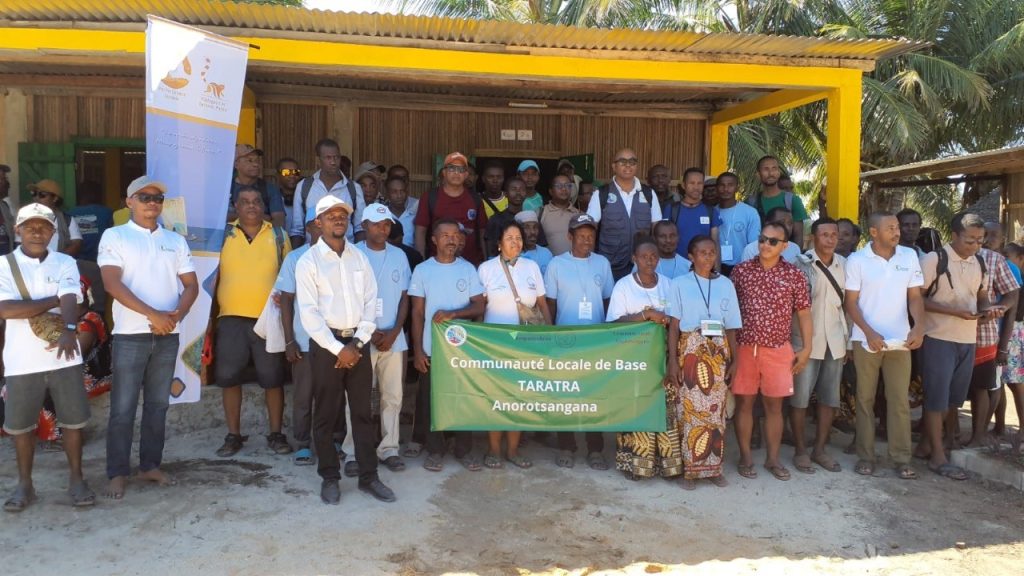
Mobilization of the TARATRA Local Community in Anorotsangana as part of the Conservation Program.
Tangible results in the first half of 2025
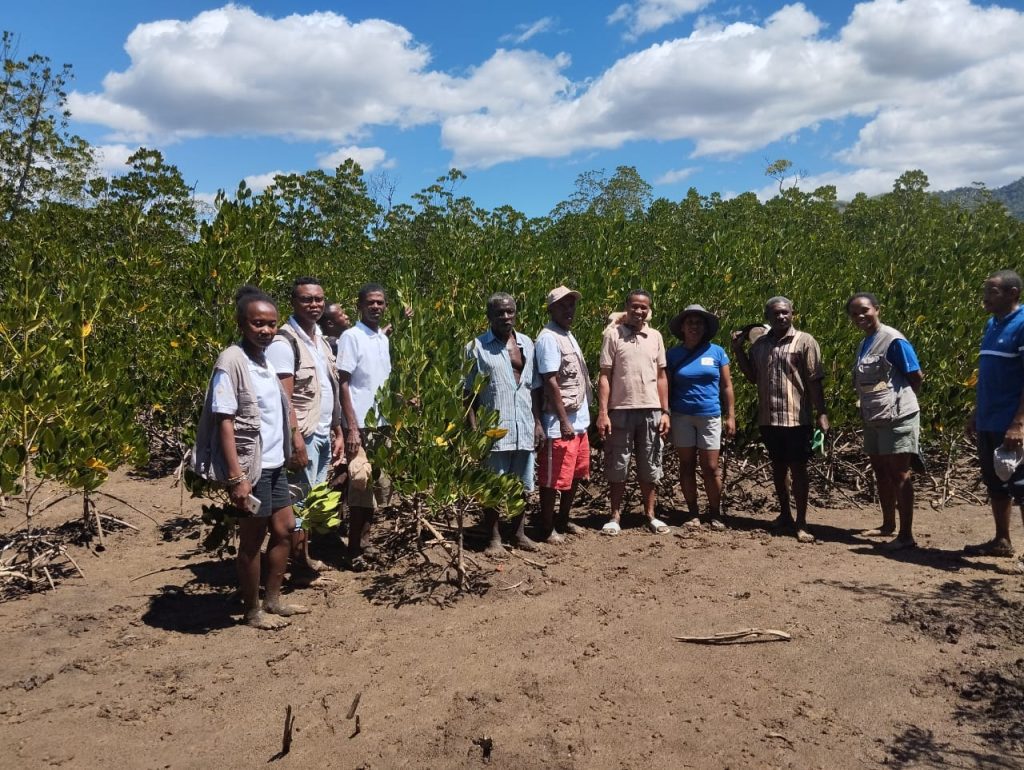
Collective mobilization for climate resilience: project partners posing after mangrove planting.
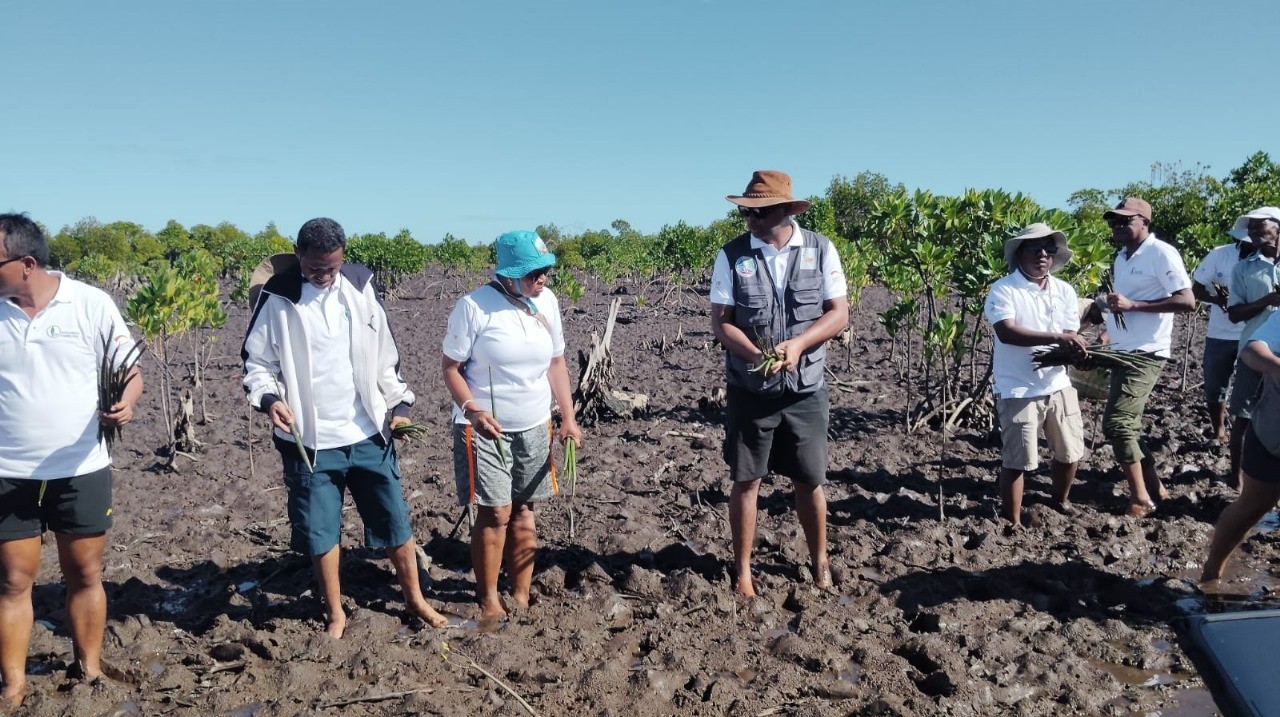
During the first half of 2025, the program enabled the restoration of more than 160 hectares of mangroves in its intervention zones. These efforts mobilized around 350 participants, including nearly 50 women, demonstrating strong community involvement. Ecological effects are already noticeable. An increase in fish and crab stocks has been observed, with an average catch per unit effort (CPUE) of 5.37 kilograms for fish and 3.66 kilograms for crab. The return of endemic species in the restored areas has also been recorded, along with the presence of large predators in the reconstituted mangroves, signaling a gradual reestablishment of ecological balance.
Testimonies illustrating the impact of the program
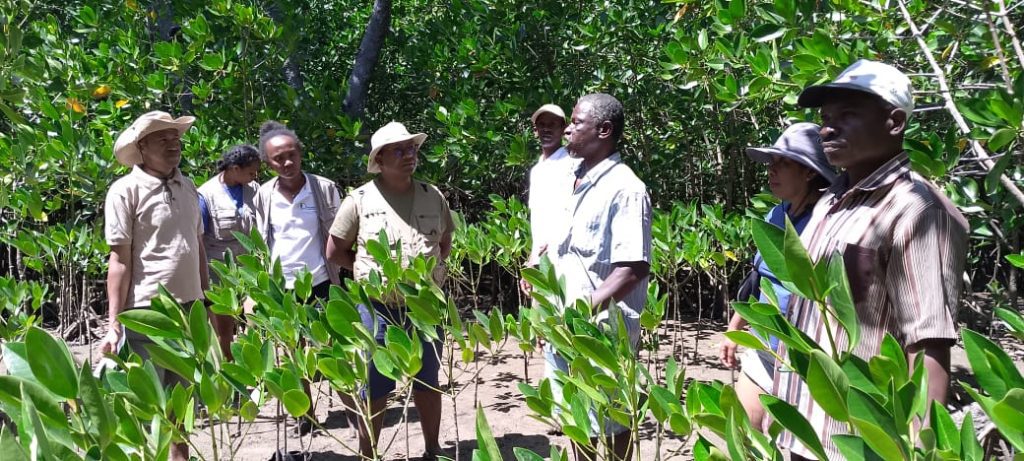
A moment of listening and sharing between the MNP team and the engaged local communities.
The testimonies collected in the field illustrate the concrete impact of the program on natural resources and livelihoods. The president of the Control and Surveillance Committee (CCS) of Marohariva and Mangirakiraka, within the Ankivonjy Marine Protected Area, states that since the implementation of the Honko Mamelon‑jafy program and the start of mangrove restoration actions, a clear increase in fish, shrimp, and other marine resources has been observed.
For his part, Dadin’i Bako Ambaroimena, member of the Ranomanitra association in Ambaroimena, in collaboration with the FAMELONA association, emphasizes that mangrove restoration brings many benefits. It provides an essential breeding area for crabs, a natural habitat for shrimp, and a true nursery zone for fish.
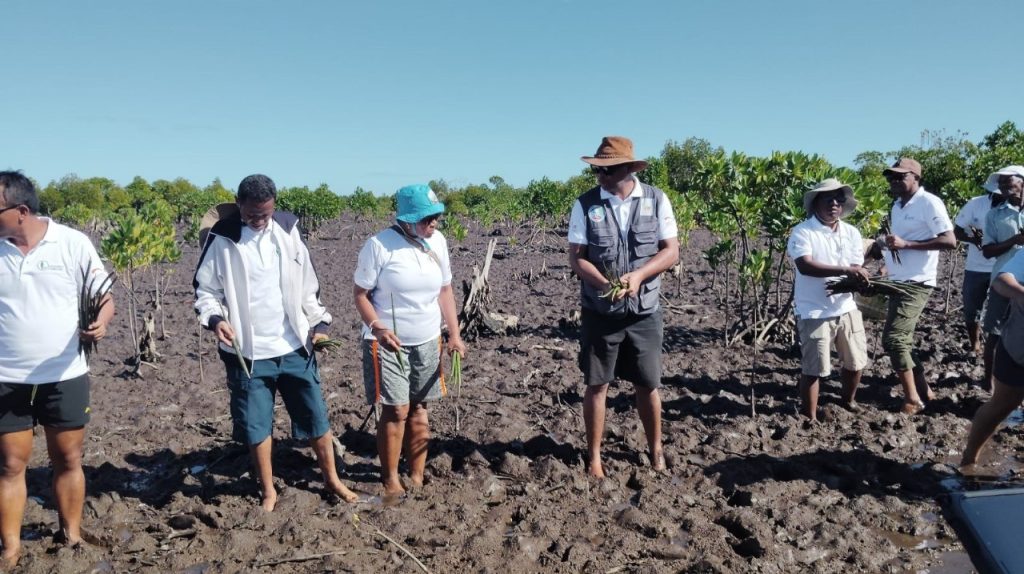
Project actors at work, feet in the mud, bringing the mangrove back to life.
Through its actions, the Sustainable Coastal Fisheries program demonstrates that ecosystem restoration can go hand in hand with human development. By placing communities at the heart of initiatives, it promotes an integrated approach that combines biodiversity conservation with improved living conditions. This model of cooperation and local implementation could inspire other projects for the sustainable management of natural resources in Madagascar and across the region.