
At the heart of the Nosy Tanihely Marine Park, a coral reef restoration mission took place in October 2025, led by Dorsch Impact and Madagascar National Parks. Over the course of ten days, experimental structures were installed to test coral regeneration techniques adapted to local conditions. This initiative marks the beginning of an ambitious marine conservation program, built on science, collaboration, and field commitment.
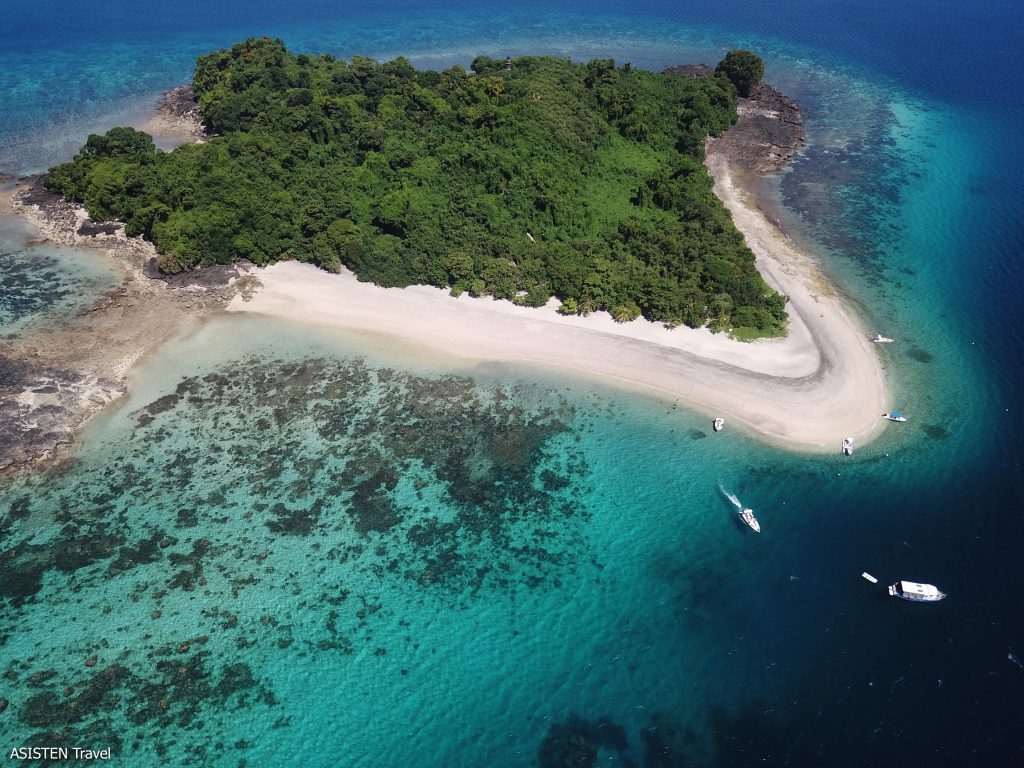
Aerial views of Nosy Tanihely
A pilot project at the heart of the Marine Park

The two coral trees installed at Nosy Tanihely, each carrying 100 fragments.
From October 1 to 10, 2025, the Nosy Tanihely Marine Park, located off Nosy Be, hosted an ambitious coral reef restoration mission led by Madagascar National Parks with the technical assistance of Dorsch Impact.
This operation marks the launch of an experimental program aimed at strengthening the resilience of coral reefs in this emblematic protected area of northwestern Madagascar.
The main objective of this mission was to test different types of coral nursery structures in order to identify the optimal conditions for the growth and survival of coral fragments in the park’s waters. Three devices were implemented: two coral trees, each hosting one hundred (100) fragments; a floating table with fifty-five (55) fragments; and six (6) coral stars designed to support one hundred and eight (108) fragments. These structures were installed in carefully selected zones based on precise ecological criteria, such as low sedimentation, moderate currents, a depth of around ten meters, proximity to the natural reef, and distance from boat anchoring areas.
A collaborative and technical mission
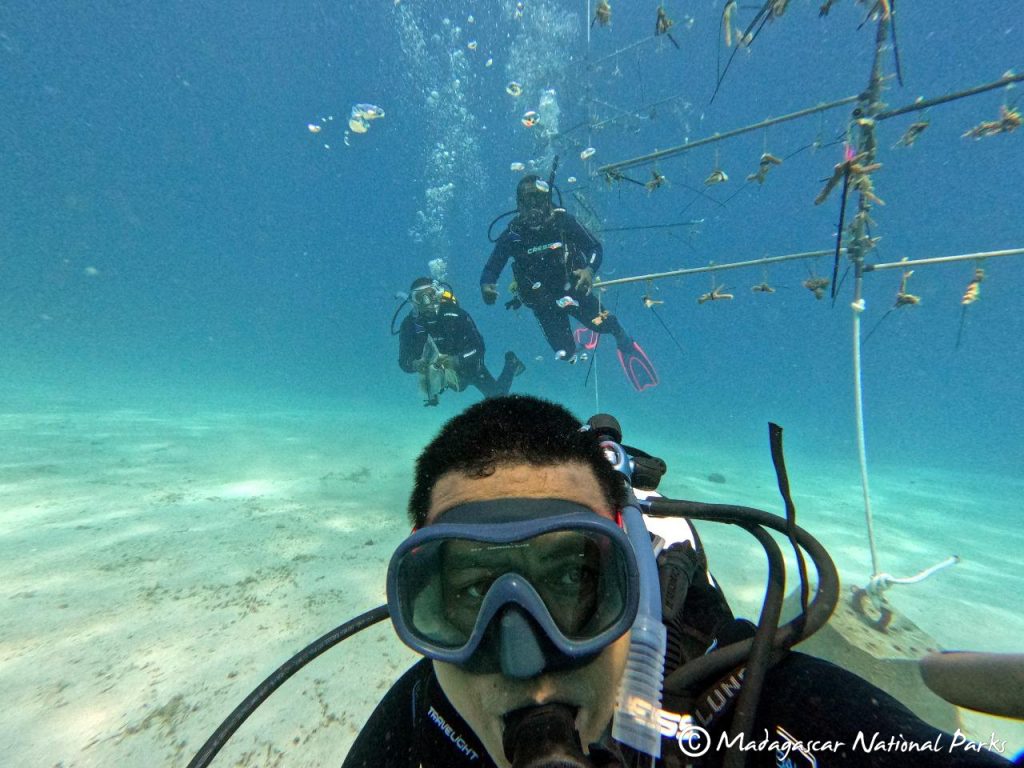
Dr. Hajaniaina Ratsimbazafy, marine restoration expert, alongside the rangers of the Nosy Tanihely Marine Park during the installation of coral structures in the underwater environment. A technical and committed collaboration at the heart of the reef.
Under the coordination of Dr. Hajaniaina Ratsimbazafy, marine restoration expert at Dorsch Impact, park rangers were trained in fabrication and installation techniques. The structures were designed using local materials (iron bars, PVC pipes, marine ropes, buoys, resins), and each fragment was identified with a numbered tag to facilitate monitoring.

Coral nursery grid installed at Nosy Tanihely, with fragments fixed for reef restoration.
After an underwater survey to identify the most suitable sites, the structures were progressively installed over several days. Each stage was carried out with rigor to ensure the stability and safety of the infrastructures. The final phase of the mission allowed for verification of all installations, recording of GPS coordinates, and field observations.
A complementary training session was provided on the use of the Allen Coral Atlas, a satellite mapping tool that enables monitoring of coral bleaching. This technology strengthens the park’s monitoring capacity and paves the way for more detailed reef surveillance.
Initial findings and perspectives
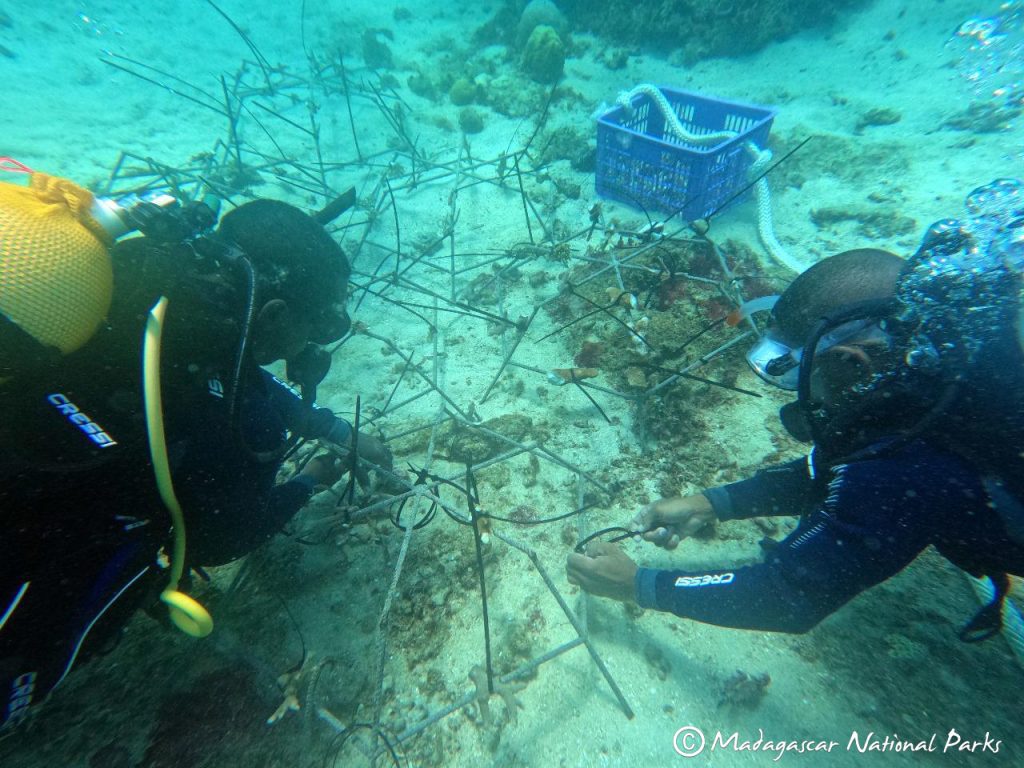
Fixing coral fragments onto the coral stars by the park rangers. A delicate step that highlights the technical challenges in the field.
The first field observations reveal some technical challenges, notably the difficulty of securing structures on certain rocky substrates and the need for adjustments to improve stability. The cost of manufacturing coral stars remains reasonable, and the site’s environmental conditions are considered favorable for continuing the program.
The next steps include regular monitoring of fragment growth, periodic cleaning of the structures, re‑stocking in case of high mortality, and data analysis to refine methods. In the long term, the extension of the program to other areas of the park is envisaged.
A lasting commitment to marine diversity
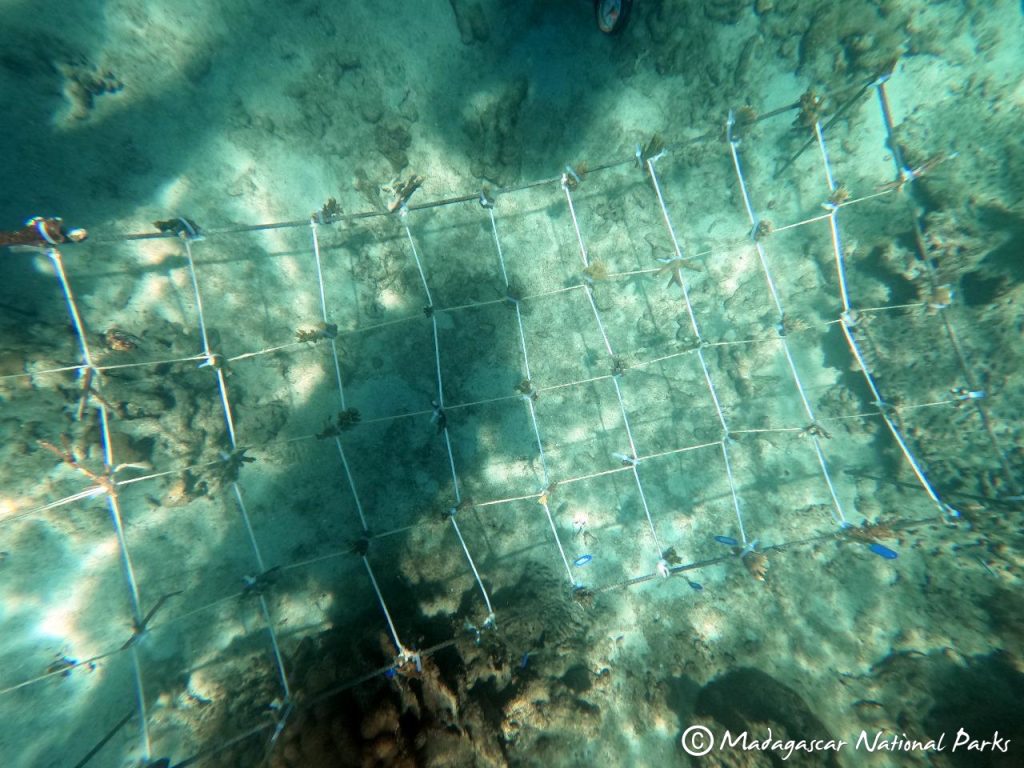
Photo illustrating the coral structure under monitoring in the waters of Nosy Tanihely.
This mission marks the beginning of a sustainable coral reef restoration program at Nosy Tanihely. It illustrates the strength of collaboration between scientific expertise and local commitment. The Park thus becomes a pilot site for coral reef regeneration in Madagascar, with the ambition of preserving its marine heritage for future generations.